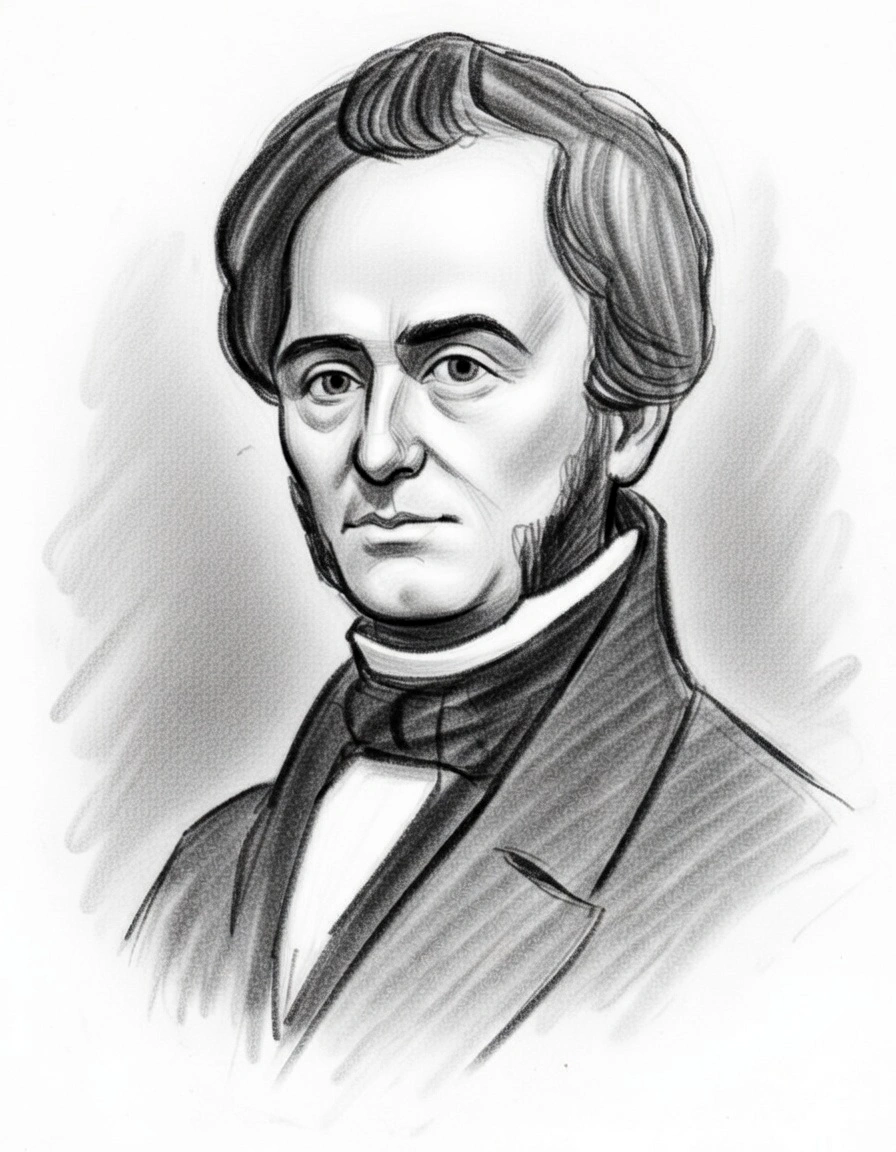
Moses Austin
Moses Austin (October 4, 1761 – June 10, 1821) was an American businessman, pioneering lead miner, entrepreneur, and frontier settler who played a foundational role in the development of the American lead industry. Born in Durham, Connecticut, he was the youngest of nine children of Elias Austin, a tailor, farmer, and tavern keeper, and Eunice Phelps Austin. Both parents died by the time Moses was fifteen, after which he moved to Middletown, Connecticut, where his older brother Stephen loaned him money to start a merchant shop in the dry-goods business.
By 1783, Moses had relocated to Philadelphia to join Stephen in a similar venture. There he met Mary (Maria) Brown, daughter of a prosperous iron-mining family from New Jersey, and married her on September 28, 1785. The couple had five children, though two died in infancy (Anna Maria in 1787 and Eliza Fuller in 1790). The surviving children were Stephen Fuller Austin (born 1793), Emily Margaret Austin (born 1795), and James Elijah Brown Austin (born 1803). Moses and Mary moved to Richmond, Virginia, where he expanded the family business with a branch store.
In 1789, Moses and Stephen secured a contract to supply lead for roofing the new Virginia state capitol building in Richmond. This led them to gain control of the state's richest lead deposits in southwestern Virginia (Wythe County), where they imported experienced miners and smelters from England to improve operations. Their efforts established the foundations of the American lead industry. The mining community they developed became known as Austinville in 1792, and Moses earned the nickname "Lead King." Despite initial success—including lobbying Congress for tariffs on imported lead—financial challenges, including partnership issues, debts, and declining prices, prompted Moses to seek new opportunities farther west in the late 1790s.
Relocating to Spanish Upper Louisiana (modern Missouri) in 1798, Austin became a prominent figure in the region's lead production through innovative techniques and infrastructure development. Known for his industrious, aggressive style and Calvinist work ethic, he built communities and amassed considerable wealth at his peak. He died of pneumonia on June 10, 1821, in Missouri Territory (shortly before statehood) and is buried in Potosi Presbyterian Cemetery, with his grave later preserved in concrete.